Hitler’s Prisoner . . .Part 3

The Book…continued

Utter Defiance
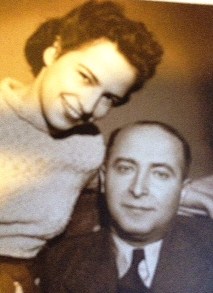
Susan "17" and her Father

Shortly after arriving at Thereisenstadt, mother and daughter faced their turn for the selection process. As fate would have it, one of the administrators choosing whether you stayed or went to the “East”, was Susan’s former gymnastics coach, Fredy Hirsch. He had been assigned the job of youth welfare administrator by the Nazis. As soon as he recognized Susan and her mother he told them they would be staying. However, Freidl was more concerned about being with her lover, Rudi Guth. She asked if he would also be staying. Fredy informed her that was impossible due to the fact that he was not part of the family. Hearing this, Freidl exclaimed, “then we don’t stay either.” Susan relives one of the moments that saved her life.

“To this day I don’t know where I suddenly found the courage to defy my mother for the first time in my life. I said …No, I am staying! If you want to you can stay with me, but I am staying. Her love for Rudi was stronger than her love and concern for me.

Susan told her mother they would meet up again for Christmas at the Prasna Brana. Those would be the last words she would say to her mother. Almost 50 years later while visiting the Auschwitz Museum with her three children, Susan located the transport lists that contained her mother’s name. The decision not to stay with her daughter that fateful day at Theresienstadt, ended her up on a train that took her directly to the gas chambers of Sobibor, not to the arms of her lover.

During her eight months stay at Theresienstadt, Susan would locate many of her friends from Prague, make new friends and fall in love with Dr. Ernstl Fuchs.

“It was a wonderful time for me despite the fact that we were incarcerated in a camp run by the Nazis. Being in love was important in Theresienstadt, though the object of one’s affection might change. It was important to have someone who could help with providing some extra food, which Ernstl could do, working in the hospital in the Sudeten barracks.

The extra food that Ernstl would provide was cooked up on a little pot-bellied stove by Susan and her best friend, Lilly. This little luxury would prove to be the two girl’s passport to hell. Upon discovering the supposed “stolen” stove in Susan and Lilly’s possession, the two friends were immediately called up for transport to Birkenau. Susan remembers that having to say goodbye to Ernstl felt like the worst feeling she had experienced up until that point in her life. However, nothing in her young life could have prepared her for the next part of her journey, which she describes in her book as literally a trial by fire.

Auschwitz-Birkenau

After a two-day long journey huddled together on wooden benches inside a cold, dark enclosed compartment, Susan and her fellow prisoners arrive at their destination.

“The train stopped, the doors were flung open and the very first impression was a smell, or more accurately, a repulsive stink, seemingly emanating from a smokestack in the background of the train, its flames topped by black swirling clouds. We found ourselves standing on what appeared to be a fairly wide railroad platform, bordered on both sides by long barbed wire fences.

The scene of terror, often seen in documentaries or Holocaust recreations, began with the women being lined up separate from the men. The SS men in their tailored uniforms positioned themselves directly in front of the line of women, posed and ready for inspection.

“They surveyed the first row of women standing in front of them. Some women in the row were sent to the tarp-covered trucks lined up on the ramp in front of the ambulance. The rest were told they would walk. I was standing well back in the column and could observe that a certain pattern seemed to evolve. Girls under 14 or 15, or if they looked under that age, and women over 35-40, would go by truck.  All children with their mothers in the column went into the truck as well.  I remember thinking: “How lucky they are to be able to ride. Now we remnants will have to walk God knows how far.” At that point those of us left standing did not realize what we learned all too soon – that the trucks took the women and children chosen “to ride” directly to the gas chamber and the crematorium.”

Out of the original 500 or so women transported, Susan and 61 others remain. After being herded like sheep into empty barracks with nothing more than a dirt floor, the dehumanization process began. First, each woman was stripped of any jewelry or valuables. Next, the women were marched into a large room with recessed windows, each one marked by a young SS man on guard patrol. In front of the young male guards, the woman were ordered to strip completely.

“Again, I can only say, I must have been in shock, feeling as if I was standing outside of myself observing the proceedings. I calmly took off all my clothes and the felt boots I was wearing. Then we were shorn from top to bottom of all body hair. This was supposedly for hygienic purposes, but in reality if was just one of the numerous processes calculated to demean and dehumanize the person, so that no dignity, self-esteem, or a sense of the need for self-preservation would be left.”

Naked, cold and shorn from head to toe, the women were forced into the shower room where they underwent a one minute ice-cold power-wash. No towels were offered to dry their shivering bodies only brash orders to move on to the next station. They would dry their wet skin with their new prison garments…rags sewn from captured Russian soldiers’ uniforms. Shoes, were not a given.

“If we were unlucky, we got clogs. Clogs rubbed the foot, caused open sores, resulted in infection, in gangrene, in death. Lucky me; I got shoes, high-tops, if I remember correctly.

Next came the most demeaning step in the Nazi’s exertion of their notorious humiliation tactics . . .the original mark of the beast. . .the tattoo.

“Depending on who did the tattooing, women prisoners trained in doing this, we either got a large sloppy five-digit number or a small neat five-digit number. Either one had a triangle underneath . . .there was no triangle under the Jewish number. Then the SS discovered that identifying a naked Jewish woman was not as easy as identifying a naked Jewish man who stood out from the others by being circumcised, and unless they looked Semitic or of Mediterranean type, women had no identifying mark. And if they were blue-eyed to boot, and hairless, there was no way to distinguish them from Aryan women. Therefore, triangles were tattooed under the number of all Jewish women new arrivals, after November of December 1942.

Following the strip-down, shaving, icy shower, issuance of rags, and the permanent ink reminder that they were just a number…came the handing over of the bowl. The psychological message was clear to the Nazis’ captives. . .in our eyes, you are nothing but dogs.

” . . .we were handed the bowl, a brick-red metal bowl about 10 inches wide and about 5 inches deep. This bowl, as we all too soon realized, was the only utensil we were given: no knife, no fork, no spoon , no cup, no saucer, no plate. There were also no toothbrushes, handkerchiefs, towels, nor combs. In a word, we were totally deprived of any civilized accessories; another fiendishly clever aspect of the Nazis’ plan to totally dehumanize their victims, which of course, led to mental dehumanization as a consequence. It reduced the prisoner’s self-esteem, her self-awareness, in short her humanity, to zero, preparing her for the quick descent into what in the camp jargon was called the “Muselmann” state (zombie) which designated her as ready for the gas.”

Death-Defying Stupidity

On day two at Birkenau, Susan impetuously stepped out of line and did something that could have ended her life that day. She dared to speak to the SS men on watch. Once again, her assertive spirit and ability to think fast on her feet, would keep her alive.

“Don’t ask me what prompted me to do it – was it sheer stupidity, or simply ignorance of the rules? – I stepped out of my row of five…stood at attention and said to the SS-men: “Melde gehorsamst Ich bin eine Bureaukraft” (With your permission, I would like to report that I am an officer worker!) Only later was I told that what I had done could have just as easily bought me a trip to the gas chamber…”

Apparently her aggressive style of self promotion did not issue in negative results. In fact, just a few days later, Susan was assigned work duty in one of the barracks outside the main gate. The barracks housed the offices of the Stabsgebaude, the staff building of the main camp where all the administrative work for the entire camp complex was carried out. This work detail allowed her to get a hot shower, fresh clothes and even new shoes. Unfortunately her stay in the office would be brief and in March of 1943 she was returned to the unending horror of Birkenau.

“Not long after returning from the Stabsgebaude, I began running the dreaded fever, the first sign of typhus, a disease spread by lice. Gastroenteritis followed. Every morning for roll call, I would stand between two of the women and they would practically hold me up…I remember them practically carrying me through the selection, that at that time, took place every morning and every night. I certainly looked like a Muselmann: concave in places where female bodies were supposed to be convex, with big eyes and a long nose in a skeleton face. But I distinctly recall keeping my eyes wide open and trying for what must have been a hideous grin to prove that I was not the apathetic, shuffling, Muselmann, ready for the gas.”

Over the next year, Susan would survive rape (with the promise of food she was lured by a guard into a store-room), venereal disease after the attack, near starvation leading to several brushes with death. Once again, her skills and intellect would prove to be her salvation. The same officer who she had so boldly approached on day two of her arrival, would offer her a new job detail.

“As I came in front of him, he smiled and said, “Ah, the office worker; how about you working in Kanada for a while?” And that is where I went, to Kanada, the most desirable work detail in all of Birkenau. . .Kanada was the elite work detail of the women’s camp as well as the men’s camp. It was the place where everything was available if we were careful enough not to get caught smuggling “organized items into the camp.

Death March and Finally Liberation 

Late in the year of 1944, Susan writes that rumors of Germany’s demise were swirling throughout the camp. Revolts occurred in the crematorium, those caught were hung in front of the entire camp. On the night of January 17, 1945 the orders to evacuate the entire Auschwitz complex were set in motion…evacuation meant the prisoners were going for a long walk, later it would be referred to as the “Death March.” As Susan recalls, the march took at least two days and two nights. The frozen snow-covered roads in the forest quickly became lined with bodies. The order was – “Bullet in the head to those who cannot walk.” Susan and her close group of 15 women from the Kanada work detail, clung together. Their destination was yet another train…to yet another camp, Ravensbruck, the only women’s concentration camp in the Reich.

“There the prisoner housing was luxurious compared to what had been provided in Birkenau for the main women’s camp. Here each of the women had a bed – I can’t recall whether they were two level bunk beds or single beds – but they had sheets, blue and white checked, and pillowcases and blankets.

A few months later, April 28 to be exact, the women were once again on foot, fortunately it was Spring and the weather was much more agreeable. This time, no one seemed to know where they were going. Susan believed they were marching west, in her opinion, the Nazis seemed only to be interested in getting them to the American lines – or more like it – themselves to the Americans, knowing full well if they ran into the Russians they would be shown no mercy.

“I seem to remember that we marched all the way through that first night. I see us on a paved road, with the moon lighting our way as we marched in a ragged formation, the three guards sticking close to us to make sure we 15 were all together.  – The morning of May 1st, while we marched on a two-lane highway, surrounded by Germans fleeing the Russians, it seemed as if all of the eastern part of Germany was on the road. Suddenly a motorcycle with sidecar, driven by a soldier, roared by, and he yelled as loud as he could “The Fuhrer is dead!” We’re free now, we shouted.”

A strange vehicle approached, Susan noticed the words “Daisy-Mae” right below the windshield. She knew they had finally run into the Americans. She was the only one in the group who spoke some school English. . .she approached the soldier and asked if he could please liberate them. She rolled up her sleeve to expose the tatoo and explain who they were and where they had been. After disarming the Germans who escorted the young women, he instructed them to continue walking to the town up ahead where they would find the Americans taking charge. When the girls finally arrived at the American checkpoint, they were greeted with total confusion. The soldiers had no idea what to do with them and told them to return to where they came from.

“I rolled up my sleeve and the rest of us did as well, and said: “I don’t think so! We come from Aushwitz and Ravensbruck.” They just stared at us, had no idea what we were saying, until an interpreter informed them. . .”these girls were extermination camp prisoners, they have no place to go.” So they told us…go into the village ahead and ask the commanding officer of our outfit what you should do. . .we walked the five or ten minutes on the dusty country road to the village. I was a strange feeling close to claustrophobia. This was the first time in three years that I had walked without a guard, without being told where to go. . .without fences or guards around me. A very strange feeling.”
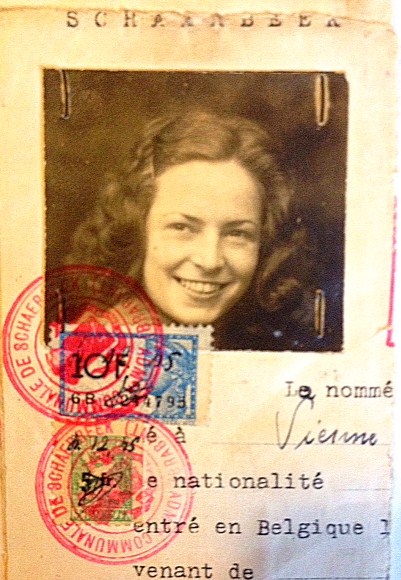
Susan "Free" in 1945

Upon arrival, Susan and the others received a dental check-up, fresh clothes, etc. Once again, Susan was offered a job – this time as an interpreter for the counter intelligence group. This skill would land her in her first private bedroom in three years. After a conversation about former Jews she knew and inquiring about their fate, she discovered her father was still alive and living in Brussels. The APO immediately wired relatives who wired her father. Susan would not get in touch with her father directly until July or August of 1945, right before she went to Brussels.

“In July of 1945, I received permission to enter Belgium and took the train to Brussels. With my schoolgirl French I managed to find the right trolley car and get out at the right stop, Avenue Tervueren, and found the apartment house where my father lived, in the rue Vandenbussche, went up the stairs, and rang the bell. He opened the door. He had not changed at all. It was an emotional reunion; I think we both cried. It had been almost 6 years since he had left Prague and since both of our lives had taken frightful as well as miraculous turns, that kept us both alive.”

Susan completes the saga of her survival with the retelling of her coming to America, getting married and setting the course for the rest of her life.
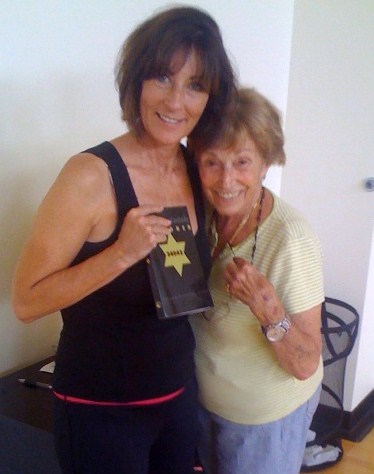
After reading her book, I knew how much of a distinct honor it was that I now had the opportunity to spend time with her, to pose my own gnawing questions, to try to come to grasp with the kind of human spirit and will that could overcome such atrocities. I sit outside the window of the exercise room – she does not know that I am watching – and I watch her perform her weekly Tai Chi class. Her almost 90 year-old body moves in beautiful fluidity, as if encased in invisible water. I marvel at her strength, her wisdom, her beauty. And the only emotion that comes is gratitude……extreme gratitude.

If you wish to read Susan’s book, she has informed me that the best way to buy it is through her. You may leave your email in a message and she will contact you with the details..price etc.
Hitler’s Prisoner . . .Part 2

The Book

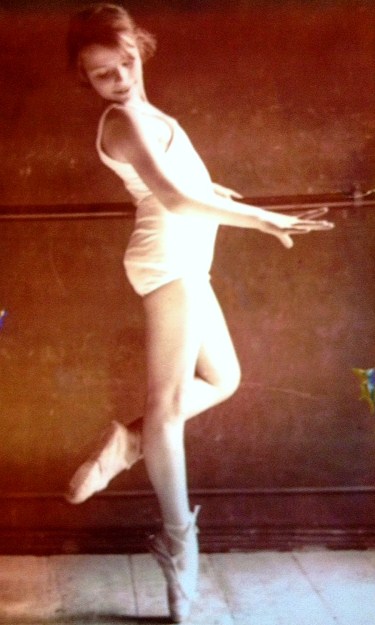
Susan, the daughter of Ernst and Freidl Eckstein, was born in 1922 in Vienna. Like all little girls, Susan grew up with many dreams for her life and hopes for her future. While Freidl passed on her incredible intelligence and audacious (although late to bloom) spirit to her daughter, it was her father who gave her a love for the arts, especially dance. At an early age, Susan was lacing up toe shoes with the intention and dedication of a prima ballerina. In 1929, the Ecksteins moved to Berlin, where Susan had the opportunity to attend ballet school. There were only two other Jewish girls in her class, Hanni and Ruth. At the tender young age of 11 years old, Susan would witness first-hand why her father always said “to be equal as a Jew we have to be better.”

“Ruth was the best gymnast in our class, better than any of the blonde valkyries. When they had to eliminate her from competition, because she was Jewish, the team did not win any more prizes as they had when Ruth was in the group. I can only imagine that this happened because the school did not want to have a Jewish-looking athlete in the competition. After all, Jews were not supposed to be athletes, according to the German propaganda.”

Back to Vienna

While most Jews in Germany were standing in line to emigrate overseas, much to Susan’s dismay, the Ecksteins invested good money to move back to Vienna to renovate her grandmother’s apartment. This decision in Susan’s words, would prove to be the fait accompli . . .playing right into the Nazi’s hands and Austria’s complicit role in Hitler’s take over. While Susan was going about the business of being a teenager – studying , experiencing her first “french” kiss and attending her first ball – the mood as well as the scenery, was changing daily in Austria. Her parents worked hard to shield her from the growing anti-semitic displays. For the most part, she only heard about the despicable behavior because her mother did not allow her to go into town where most of the incidents occurred.

“Contrary to revised post-war history, not only did the Austrians receive the Nazis with great joy and enthusiasm, they also went to work on anti-Semitic excesses with a fervor that had not been seen in the Reich itself since the Nazis took power in 1933. – The gleeful anti-Semitism displayed by the population found its outlet in vicious delights, such as making Jews scrub the sidewalks, which had been covered with Schuschnigg propaganda . . .they would stop anyone who even in the least looked Jewish, without asking for identification, and force him or her to do these demeaning activities. They would stop men with beards if they looked Jewish, and would cut, or even rip, the beards off them in the street.”

While Susan’s father was taking care of business in Prague, the Gestapo came to their apartment.  It was the last time that they would see their belongings. Susan and her mother were both issued exit visas and put on the next flight to Prague, with only two little suitcases in hand.

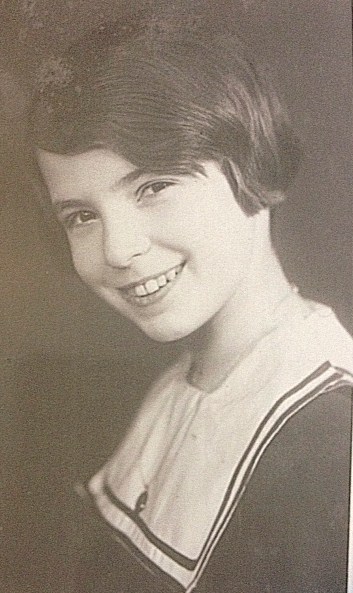
Susan at 14 years old

Refugees in Prague

An hour after boarding the flight, Susan and her mother were greeted by her father at the airport and taken into the city by taxi. The taxi stopped in front of their new apartment house. Their neighbors were Austrian and German refugees who had all left their former homes and everything in them behind. Knowing that it could have been much worse, they were all grateful for the shelter of their small flats. Over the next few years while sharing a small space with her mother and father, and eventually with other families, Susan blossomed into a young woman. She fell in love for the first time and experienced a somewhat normal life, as normal as it could be for a refugee living in fear of what might be coming around the next corner. Sensing the pending doom,  Susan’s father made arrangements illegally for the family to cross the Polish-Czech border, but due to her mother’s insistence it would be too dangerous for all of them to go, he left alone with the intention of providing safe passages for her and her mother in the near future. That day never came.

Deportation

In April of 1942, Freidl and Susan Eckstein received their transportation notice. As though hell itself had printed out a guest list, they were informed, in writing, that they would be escorted to the fairgrounds.

“And thus it was that Mother and I received a very polite card informing us that were going on transport on May 7; that we could take 50 kg of luggage, a bedroll and food for two days, and that we had to leave all our other property in place.”

May 9, 1942, mother and daughter arrived in Theresienstadt. They were sent to the Hohenelbe barracks, part of the hospital compound for the so-called quarantine, which later Susan would come to understand was actually a guise for the “selection” process.

Susan and her Mother

“It was only the administrative and professional hierarchy of Thereseinstadt that came to examine every new transport, and “selected” who was to stay and who was to go on to the “East.” At the time no one knew what “the East” meant. But those who did go “East” . . . .were never heard from again.”

   . . .to be continued, Watch for Part 3 in the following week

She Was Hitler’s Prisoner . . . #34042 . . .

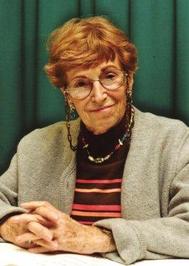
She Is Dr. Susan Cernyak-Spatz, Holocaust survivor . . .Lecturer, Professor, Mother, Grandmother . . .and an amazing woman I am fortunate enough to call “friend”.

The Meeting   Part 1 of a 3 Part Series

Until just a few years ago, when I thought about the atrocities and horrors of the Holocaust, like most Americans, my mind was limited to what might be a considered a vicarious “Schindler’s List” type of experience. I perused the History Channel for documentaries on the subject, visited the Holocaust museum in Washington D.C., and watched each and every Hollywood version on the big screen. Up until I met Susan Cernyak-Spatz, the most personal experience as a non-Jewish outsider looking in, was my hauntingly surreal trek up to the steps of the Anne Frank house in Amsterdam. As I rounded the corner, fear gripped my chest and my heart began to pound into my ear drums. I realized each step I took, my shoes were striking the exact same brick path the Nazi soldiers, only a few decades before, marched across to capture their intended prey. I could see their uniforms, hear the sound of their strident boots marking time with death, as if in a trance. . .I could smell the fear. My mind went back to Anne’s own account from her treasured diary, in that moment, I was transferred back in time.

The first time I saw Susan, she visited a fitness class I was teaching at the Jewish Community Center. In instructor mode, I was (as always) animated, giddy and probably a little frivolous. Susan walked in and joined the class already in progress. I introduced myself to her. That’s when my eyes saw it – 34042 branded forever on her arm – knowing exactly what that meant, I found myself suddenly thrown into an internal meltdown. Shocked into sobriety, I struggled to speak and cue the next move. Within minutes, she left . . .turns out she was in the wrong class. After it was over, some of the students shared her identity with me. She was Dr. Susan Cernyak-Spatz, professor at UNC Charlotte, Holocaust survivor and well-known lecturer on the subject.

Several years later, in the midst of channel surfing for something decent to watch on T.V., I saw a familiar face come across the screen. It was Dr. Cerynyak-Spatz. She was lecturing to a group of students at the University. My hand froze on the remote. . .I was transfixed. Hearing her tell just a portion of her personal story, left my hungry to know more. I want the reality to sink into my bones, I desperately want to find some inkling of comprehension of the human condition which was capable of such evil. I pray I get a chance to get to know her.

Not long after that, I walked into the JCC, only to find her sitting at a table outside of the aerobic room. I approached her, introduced myself and began a conversation. I invited her to attend my Therapeutic Ballean class which would give me the opportunity to give her more individual attention. Much to my delight, she attended the very next class. At 89 years young, she was amazingly strong, flexible and of course, fearless. Because the format includes hands on stretches and massage, I got to touch the permanent reminder of her hell on earth. As my hand gently swept across her tatoo, I felt my throat clinch, I quickly turned my head away to fight back the tears. If I could have, I would have embraced her arm for hours. . .as if trying to receive a glimpse of history through osmosis. I felt overwhelmed, blessed and even more determined to connect. Fortunately for me, she enjoyed the class and announced she would be attending as often as she could. I asked her where I could buy a copy of her book,”Protective custody Prisoner 34042.” She brought me a copy the next class and thus began my journey of what I consider to be the ultimate privilege – the opportunity to get up close and personal, face to face and soul to soul with an eye-witness to the most heinous, unspeakable war crimes in modern-day history – I am honored, completely humbled and inspired beyond my utmost expectations.

Coming Soon: Part 2  THE BOOK, complete with pictures of young Susan and her parents. 

Dads . . .In a Word

Recently, a male friend of ours (trying to save his troubled marriage by attending counseling sessions) confided in my husband. During an emotional session, a provocative question was posed by the therapist. “How would you describe your father…if you could only choose three words?” Much to his surprise, he could only come up with one – selfish.  This realization led to his most insightful “break-through” session to date.

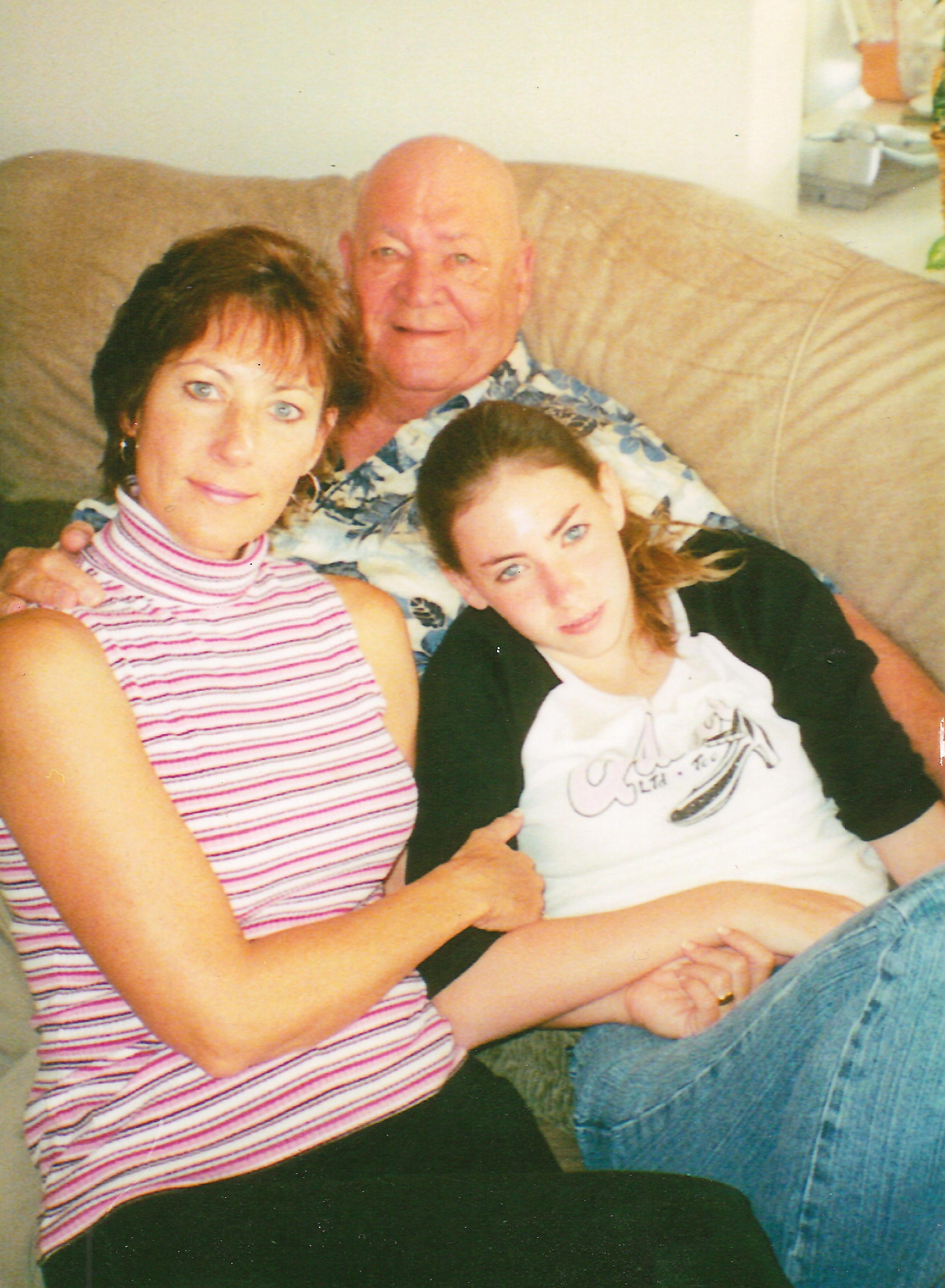
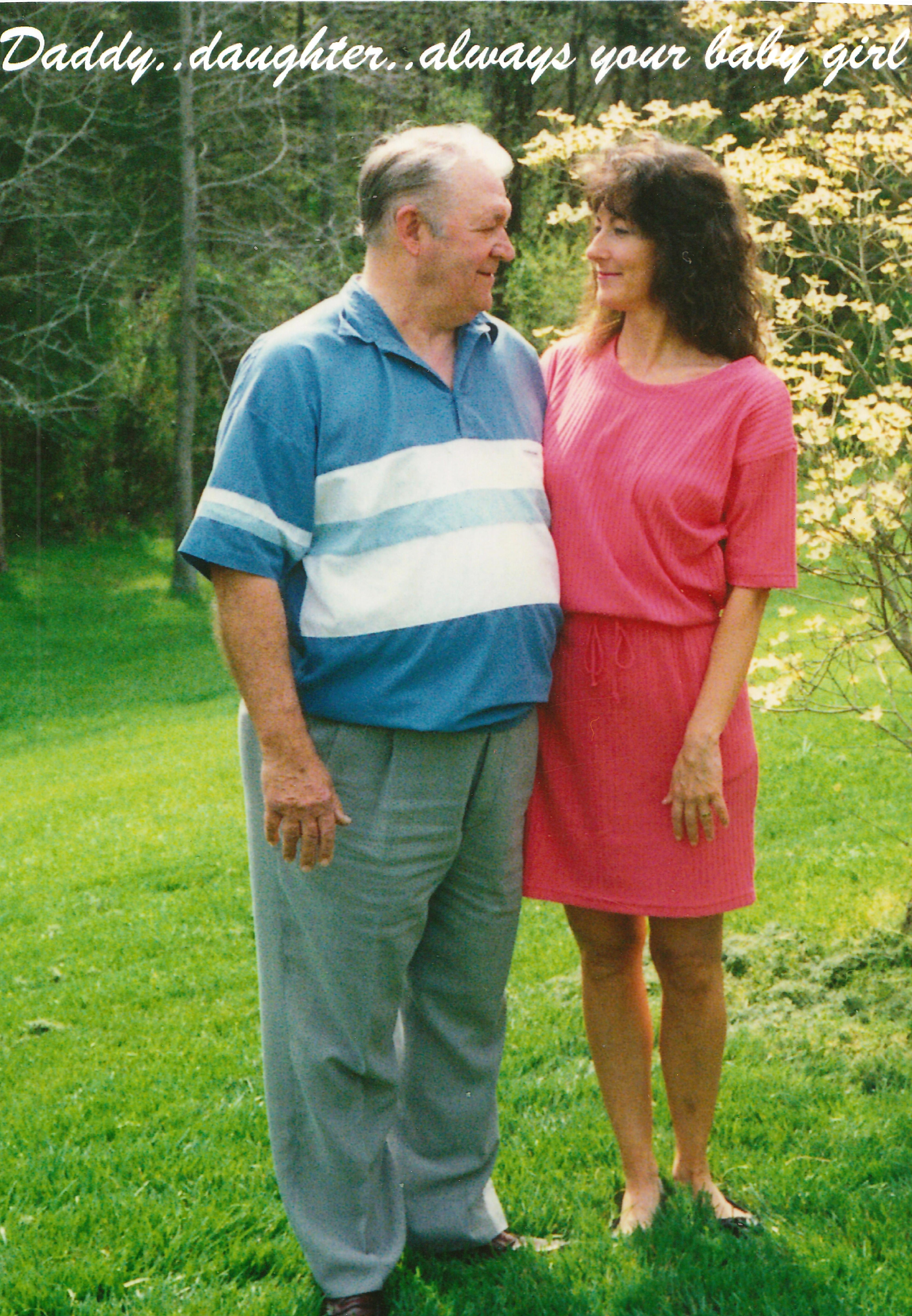
When my husband shared the story with me, it naturally made me pause and think about my own father. My last conversation with my dad was only a year ago – just a few hours later after we said our goodbyes, he passed away peacefully in the middle of the night.

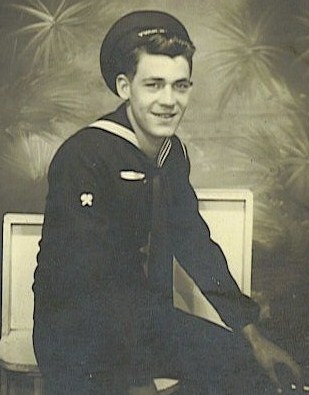
In the midst of missing him and mourning my loss, I’ve visited many memories – some sweet, some bittersweet. Throughout the day, pictures of my dad’s life – a young handsome sailor to an 83 year old great grandfather – randomly pop up on my computer slideshow. With the visual backdrop, searching for the “one word” to describe my dad proved not to be so difficult, in fact, as I really observed each captured freeze frame, a common thread began to emerge. It was so obvious, at least from this baby daughter’s perspective, if confined to one word to describe my dad, for me it would have to be . . . “loving”.

Truly, I’m not blind to the fact my dad had flaws and may have been selfish in some ways – but in the area of affection he was more than generous. His arms (always available for hugs) and his kisses (sometimes rebuffed)  – sealed every hello and goodbye. Over the course of his life my father struggled with many personal demons. Which is why I am positive if you asked my three siblings the same question, they would all come up with a different one word descriptor for my dad. In many ways, he was his own worst enemy, perhaps a character flaw that the artist/lover personality types share. Interestingly, I have observed many of the same traits in my son.

Upon deeper reflection, it occurs to me that my perception of my father as “loving”, has been colored not only by my dad’s displays of affection, but also by my own personality, filters and role I played in his life. Since I was only five years old when my parents divorced, I have no scarring memories (at least consciously) of their often tumultuous interaction. I grew up oblivious to his personal approach toward parenting, discipline or perhaps lack thereof.  Time spent with my dad meant fun-filled activities, cool restaurants and shopping sprees. In a sense, from birth until the day he passed away, I was the baby daughter who climbed into his lap and flung my arms around his neck.

In the last few days, I have posed this same question to a few of my friends.  The answers have covered a broad spectrum, from “harsh” and “bully” to “aloof” and “pleasant”. If the first word that comes to mind is negative, perhaps it would be helpful to take the time to identify at least two positive attributes which could allow a different reality to take shape and emotional healing to begin. No matter what one word comes to light, I believe, at least for me. . .the life lesson is to not be held back by what my parents were or were not, but to constructively use the information to choose what kind of person, spouse or parent I want to be. Learn, change. . .grow.

Like LuvYa.com on Facebook !

My Journey of Aloneness

Insomnia Induced Epiphany

From a very young age, I was extremely scared of the dark. . .even in the middle of the day. My dad left a vacant spot in my mom’s king size bed when I was only five years old. I quickly claimed dibs on sleeping in the big bed by my newly divorced mom’s side. No need to face the monsters under my bed or the boogeyman hiding in the closet, I got to sleep safe and sound, snuggled up close to my mother. Perhaps this is when my struggle with aloneness began.

In my teen years, my mom worked full-time not getting home until after 5:00.  My school was just a few blocks away from our little two bedroom house. I would take my time walking home because every step brought me closer to the empty house that I would have to enter. By the time my hand would reach the “never-locked” door knob, my heart would be pounding so hard I could barely breath. My rational mind would buckle under the weight of my deepest fears. Many times, I would just sit on the front porch and wait because I was too scared to go inside in the middle of the day by myself. Aloneness, for me,  was a lonely isolated island filled with scarey predators, darkness and extreme anxiety.

My senior year of high school, my mother was diagnosed with bone cancer. After surgery to remove her cancer-feeding ovaries, she required full-time care and went to live with my sister in a different city. Suddenly, I was all alone in our apartment, in a city where I had no family. I had no choice but to abruptly face my fears. It is this part of my journey that remains most prominent in my psyche. Many nights, I fell asleep with the T.V. turned on – Johnny Carson, Joan Rivers and guests, my late night companions. 3:00 a.m. I would wake up  to the frozen Indian face staring at me accompanied by an irritating noise piercing my dreams. All programming was over – no cable, no remote, only three main channels. “Aloneness” during this time of my life, resembled a deserted island…I felt abandoned with no rescue in sight. Staring out the window was my perch, my guitar was my solace and favorite distraction from the depths of my loneliness. It is then, I began an ongoing internal dialogue with God.

Soon after my mom passed away, I got married. My aloneness, quickly replaced with domestic activities, in-laws and very close neighbors who I could reach out and touch. Not long after that, I had my son to hold in the quiet moments. Aloneness became the blissful moments in the quiet of the night highlighted by my newborn son nursing with his tiny hand gripped tightly around my finger. Fears of being all alone, a distant memory from my past life. A few years later, another child, a new city and my husband traveling around the world led to yet another phase of my exploration of aloneness. Yes, I was alone in my bed for nights on end in those days. But my children were sleeping across the hall, so fear no longer colored my quiet moments, and complete mother-fatigue left little time for deep contemplation.

Now, here I am. My children’s bedrooms are lifeless shells which hold their favorite photos, yearbooks and accolades. Once again, on the occasion my husband has to travel (which is much less these days) I am left to discover where and who I am in my aloneness evolution. Maturity and life experience has squelched my fears (as well as a trusty alarm system), loneliness is no longer a pain in my soul – what remains is my ongoing inner dialogue with the creator, which of course are just my own musings taking place in my finite brain. I ask a lot of questions in the quiet moments. I retrace my spiritual journey in my mind seeking to understand the meaning of it all. Questions…not so many  answers.

This journey of aloneness has taken me from trying to escape it at all costs, to actually embracing the moments where I am left with my own thoughts to explore self, soul and spirit. Once a remote frightening island, “aloneness” is now my oasis of calm, where the skies get ever clearer and peace can find my soul.

My Mother My Best Friend – Part Two

Perspective on Parents As Best Friends – My Daughter’s Turn

Me:  “Sweetie, you often tell your dad and me how much you love being with us, and since you were just a little girl, you’ve always come to us first whenever you had inner turmoil or were having trouble making a difficult decision. Can you tell me why you think of both your dad and me as your “best friends?”

Daughter: “Well, mom, it’s actually very simple. You and dad established an open, honest dialogue with me from birth. You guys always took the time to sit down and listen to me without judgement or criticism. It was your openness about your own imperfections and personal struggles that helped me deal with my own crap, which made me respect you even more.”

Me: “Wow, so cool to hear you say that, especially since we both felt like we were literally throwing darts in the dark when it came to proper parenting. As we have always told you since you were old enough to understand, neither of our babies came out of the womb holding an Instruction Manual. And not only were you and your brother different because of your sex, you had completely opposite personality characteristics. Can you put into words why you never really went through that “I Hate My Parents” stage?

Daughter: “For me, I think it all comes down to connection. Not only did I love “hanging out” with you guys, because you always made it fun, but you also created an atmosphere of mutual respect. I seriously respected you both so much, I never wanted to hurt or disappoint you with my own actions. My own internal disappointment taught me the hard lessons about taking responsibility for my own actions. You gave me the space to learn that on my own. PLUS, some of my favorite memories when I was a teenager centers around Saturday afternoons – movie, bucket of popcorn, home, pizza delivery and laughter with dad as we rehashed the flick.”

Me: “We have always loved hanging out with our kids more than anything else, so that is so wonderful to hear you feel the same way! So, how about the taboo topics, like sex, drinking…etc., why do you think you have always been so open about those things with me as well as your dad?”

Daughter: “My answer to that is one word – education, and the fact that those topics were NEVER taboo! You educated both my brother and me about sex, not only from the biological aspects, but even more so the emotional aspects that go along with having sex before you are mature enough to handle it. It seems to me, you always explained things in steps that coincided with my own level of maturity. I remember one conversation in particular regarding hormones and about the difference of what boys think about vs. what girls think about when it comes to sex and romance. Drinking, drugs, and all the rest of the stuff were the same. You taught me to make good decisions and respect my own body, so none of that really interested me.” When I finally fell in love for the first time in College, whether or not to engage in sex or not, became a decision based on personal exploration and understanding of myself – not peer pressure or heat of the moment.”

Mom: “I’m so thankful for your views, those issues present some of the biggest challenges for parents. We always wanted you to learn how to trust your own instincts and give you the tools to make the wisest choices. Anything else you want to share?”

Daughter: “One of the craziest things is everything you and dad told me during middle school and high school..I mean absolutely everything…turned out to be true. The whole mean/jealous girls – boys liking the flirty, loose girls – typical teenage angst stuff completely dissolved when I went to college. High School, and the emotional roller coaster ride that goes along with it, is one big cloud of pretension that fades away soon after you get your diploma. I learned as soon as I got to college, that you could be smart, sweet and not dress provocatively, and there are a whole lot of “cool” guys out there who will like you just the way you are…..JUST like you and dad had predicted.”

Mom: “Well, that one was easy, no special genius parenting skills needed there. We were both just telling you what we had already been through. That part of adolescence never changes. Thank you for your honesty and for taking the time to share your thoughts with LuvYa.com. I’m hoping that somebody will read this and be inspired to start the dialogue with their children early, realizing how quickly those precious years will pass by. Thank you my beautiful daughter, I am thankful I get to be your MOM, and your Best Friend.”

Carpet Rendezvous For 2 ?

“Date Night” during the early child-rearing years, was one of our more lofty priorities. However, the execution of the great get-away, wasn’t always so easy to pull-off. Scrounging up enough “expendable” cash to spend on dinner, movie & a sitter – not to mention the sometimes arduous task of choosing a restaurant we both were in the mood for – often snuffed out the “romantic flame” before we even got out our front door.

During those financially challenging years ( when we actually kept a ledger of every expense down to a pack of trident) a night out on-the-town was considered a luxury.  I remember one night in particular when funds were too low to go out, we decided to get a little creative. After our kids were fast asleep, we spread out a soft comforter in the middle of the den and proceeded to have a romantic “carpet rendezvous.” I lit the candles, he poured us a glass of inexpensive wine. Fortunately for our sake, once our children were out for the night, not even a hurricane the size of Hugo could rouse them from their slumber. That night, though over 20 years ago, still remains fresh in my memory because it was just so simple, sweet and spontaneous…requiring no cash, sitter or reservations (in addition to the fact my husband stood up after the fireworks and said “Alrighty Then”…in his spot-on Ace Ventura aka Jim Carrey voice).

Today, the funny man and I have as much independence as we want. Our kids are adults and have their own lives. The one time “teenage hang-out” house feels like a quiet B & B complete with Vacancy sign in the window (which occasionally gets turned around when “said kids” choose to grace us with their presence). Offspring out of college making their own way equals extra fun money for parents to go out and enjoy whatever they want – whenever they want…right? Turns out, after years of saving, scheduling, planning and making sure all the conditions were perfect before we could relax and enjoy a night on the town. . .just when glorious “freedom” is ours. . .staying at home by the fire, cuddled up on a furry throw while watching an On Demand Movie on our own TV… sounds pretty awesome. After calling Chinese take-out I say, “hey baby..you light the candles and I’ll pour the Shiraz…,” he replies, “Alrighty Then…!”

Keys To Successful Relationships

What Is Your “Secret” to Keeping Love Alive?

It seems that self-help books such as “The Five Love Languages” and “Passionate Marriage: Keeping Love and Intimacy Alive in Committed Relationships,” have increased in popularity over the last decade as the divorce rate continues to rise. Couples are finding it more and more difficult to find reasons to stay together as opposed to calling it quits and seeking greener pastures.

Since I have this new forum with LuvYa.com, I thought it would be interesting to ask all my readers to share their own personal “tips” or intimacy secrets that have helped them obtain and sustain a thriving relationship. I’ve also been posing the question to girlfriends who are in successful relationships.

Tracy, who just celebrated 27 years of marriage, says one of the things that has helped the most – especially when her children were younger and her husband was traveling 3 to 4 days a week – was the establishment of date night. Date night provided a focused time for them to reconnect in a boy/girl way, as opposed to all of their conversations being about kids and practical family management issues. Even though her kids are older now, she still loves date night because she is able to share her feelings about interesting things she experiences during the day, as well as get-in-touch with what her hubby has on his mind, which just breeds healthy communication.

Rachel, mother of four and happily married for 21 years, says she tells all her friends that her favorite tip is “keep the fighting clean…and the sex dirty” . . .!

It’s Your Turn ! The LuvYa.com Forum is Open. . .

Please post your comment below

The “No-Frills” Gene

A Marriage Made In . . . DNA ?

In recent years, geneticists have discovered that some people are actually born happy. Fortuitously, they possess the “happy gene” which makes their frontal lobe a little more colorful than their melancholy counterpart. In May, our only daughter announced that she and her fiance had decided to get married…in May, as in the that very same month. In addition, neither one of them had any desire to have a formal wedding, but rather would like to celebrate their nuptials with an extensive honeymoon in Europe. What would be incredibly unthinkable to many (especially mother’s of an only daughter) was not only acceptable to us, but actually quite appealing. Which only makes sense because she was the offspring of parents who also chose to go the “no-frills-wedding” route. Her father and I got married two weeks after his “so…ya, wanna get married..like in two weeks..” proposal. Our marriage license required the signature of both our fathers because we were only 20 years old!

Now, a funny thing (well, more accurately) a discovery happened on the way to toast the courthouse newlyweds. As my husband and I discussed our daughter’s choice to say “I do” in front of a Justice of the Peace, we reminisced about our own wedding day, which of course was the best day of both our lives. I said, “you know, my mom and dad got married at the courthouse.” He gasped. “NO friggin way, you never told me that before!” My mom and dad had divorced when I was young, so I guess I never really filled in that blank. “You realize how bizarre this is…remember, my mom and dad did not have a big wedding, and also got married at the courthouse” he said. “So weird, I agreed, must be something in our DNA!”

Seven months later after our daughter and son-in-law returned from their honeymoon, we were invited to Thanksgiving dinner with our  daughter’s new in-laws. After an amazing meal, topped off with a few glasses of wine, pumpkin pie and football…it happened. Our “must be a gene” theory, came full circle. Turns out, the parent’s of the groom also handed down the “no-frills” gene. Out of the blue, one afternoon in the midst of their short romance, he called her on the phone and asked her if she wanted to get married…today. She said yes, so they drove to the Justice of the Peace and sealed the deal. This year they will be celebrating their “25th” wedding anniversary in Vegas !

No wedding bells or bouquets, but at the end of the day . . . our beloved “always practical” daughter had found her “perfectly practical” prince, which was not only meant to be..but already mapped out in their “no frills” DNA. Now we can only hope they both have the everlasting love gene.